Address
304 North Cardinal
St. Dorchester Center, MA 02124
Work Hours
Monday to Friday: 7AM - 7PM
Weekend: 10AM - 5PM
Address
304 North Cardinal
St. Dorchester Center, MA 02124
Work Hours
Monday to Friday: 7AM - 7PM
Weekend: 10AM - 5PM

A good exterior wifi camera turns the blind spots around your home into something you can actually check from the couch. Whether you want package delivery alerts, a deterrent over the driveway, or just eyes on the back gate while traveling, today’s wireless outdoor models make that easier than running cable through the attic. This roundup covers nine options built for very different scenarios, from solar-powered porch lights to a 4G camera for off-grid properties.

Jooedi 2K Wireless Outdoor Security Camera

Nikoglly 2-Pack 4MP Wireless Outdoor Cameras

LIWAN 4G LTE Cellular Security Camera 2K
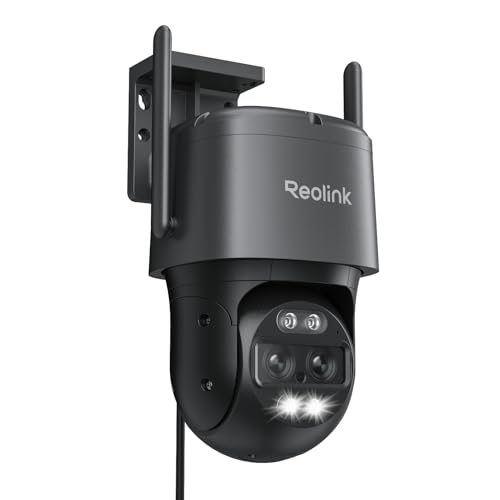
REOLINK 4K Wired WiFi 8MP Dual-Lens PTZ Camera
JCMNETE 2K Light Bulb Security Camera

aosu Solar Camera Outdoor Wireless, Fixed Panel

aosu 3K 5MP Solar PTZ 360 Camera

Reolink 16MP Duo 3 WiFi 180° Camera
REOLINK 4K 8MP 180° Floodlight Camera
The Jooedi is the kind of camera most people picture when they imagine a wireless outdoor security setup. It records in 2K resolution, which sits comfortably above 1080p without the storage demands of a 4K unit. For suburban front porches and small driveways, that resolution is more than enough to read a license plate a car length away.
It runs over standard Wi-Fi, and the wire-free build means you can mount it under an eave or beside a garage door without running cable through walls. Owners commonly report pairing it with their existing router in just a few minutes. Where this camera earns its place at number one is the balance: enough resolution, an approachable install, and a price tag that won’t sting if you need a couple of them.
First-time owners who want a straightforward 2K outdoor camera with no complicated hub.
The LIWAN 4G LTE model is a better fit if your property lacks a reliable Wi-Fi signal.
The Nikoglly two-pack solves a problem the Jooedi only solves one at a time: coverage at two angles. Most homes need a camera on the front entry and one over the side gate, and buying two of the same model usually means smoother app control than mixing brands.
Each camera records at 4MP, which is roughly the same usable detail as a 2K panel. You get built-in LEDs for full-color nighttime footage, and the wireless setup keeps install simple. For households outfitting a small home on a budget, this bundle is the path of least resistance.
Shoppers outfitting a new build or rental who want two cameras without juggling brands.
The Reolink 16MP Duo 3 WiFi is a better fit when a single seamless 180° view matters more than two separate angles.
The LIWAN does something almost no other camera in this roundup can: it works without a Wi-Fi network at all. It runs on 4G LTE cellular data and pairs with a solar panel, which makes it the only realistic option here for a remote barn, a job site, or a vacation cabin miles from a router.
For most suburban shoppers, this pick exists for a very specific reason. If your Wi-Fi simply cannot reach the spot you need to monitor, a cellular camera is the cleanest answer. The 2K resolution and solar power mean a single install can run for long stretches with minimal attention, provided the LTE signal holds.
Owners of remote properties, barns, and construction sites with no existing internet.
The aosu Solar Camera is a better fit when you have solid Wi-Fi and just want to skip the cable run.
REOLINK’s 4K wired outdoor camera is built for shoppers who want a single unit to do the work of two. The dual-lens setup combines a wide-angle view with a telephoto lens, so you get an overview and a close-up at the same time on one screen. PTZ, or pan-tilt-zoom, means the camera physically moves to follow motion across the scene.
This is the only pick in the roundup that needs to be plugged into an outlet, but that hardwired power also means no battery anxiety. For someone covering a long driveway or a backyard pool deck, the auto-tracking keeps a person in frame as they walk, which is something most fixed-lens cameras can’t do.
Households with large properties who want auto-tracking and don’t mind running one cable.
The JCMNETE bulb camera is a better fit for renters who can’t drill or run a wire at all.
Of every camera in this roundup, the JCMNETE bulb is the easiest install by a wide margin. It screws into an E26/E27 fixture, the most common screw-in bulb socket, and pulls power straight from the socket. For renters, apartment dwellers, and anyone allergic to drilling, that removes the hardest part of the job.
The camera also throws out around 1000 lumens of warm light, which is enough to brighten a porch or back step without feeling like a stadium. In our view, the trade-off is the fixed downward angle, since the camera points wherever the socket points and you can’t pan or tilt it.
Renters and apartment dwellers who want a camera without touching a drill or running cable.
The aosu Solar Camera is a better fit when you need a camera placed away from any fixture.
The aosu fixed-solar model is the simplest solar entry in this list. The solar panel is integrated into the body of the unit, so there is one panel aimed at the sky rather than a separate panel that needs its own mounting point. For shoppers who like clean installs, this layout is a real plus.
Like the Jooedi earlier, it records in 2K and talks to your home Wi-Fi. Where it diverges is the rotational range, since the pan-tilt-zoom housing here can sweep through a full 360° to cover a wide yard. You give up the resolution jump of the next aosu model, but in return you get a camera that often runs for months between manual attention.
Homeowners with a sunny fence post or backyard shed who want a single sweeping view.
The aosu 3K 5MP Solar PTZ model fits shoppers who want sharper footage from the same solar form factor.
The 3K aosu is what happens when the fixed-solar model gets a resolution bump and smarter tracking. At 5MP (a true 3K panel), you pick up enough extra detail to make out facial features across a longer driveway, which is exactly where the smart-tracking shines.
Compared to its sibling a few picks up, this camera trades a bit of battery economy for sharper frames and a smarter tracking routine that follows pets, family members, and visitors through the scene. For most backyards, it’s the more future-proof pick, assuming you have decent sun exposure.
Active households with sun exposure who want sharper footage and hands-off tracking.
The REOLINK 4K 8MP Floodlight is a better fit for shoppers who want floodlights as much as a camera.
The Reolink Duo 3 is the most unusual pick in this roundup. It stitches together two 4K sensors into a single seamless 180° view, which is a different approach than the bullet cameras further up the list. You mount it once, and you see a wide horizontal slice of your property without any blind corner.
Eight integrated spotlights and an F1.6 aperture, the measurement of how wide the lens opens to let light in, push color-rich night footage that’s noticeably brighter than what IR-only cameras deliver. For wide driveways, storefronts, or fenced yards, the 180° field of view replaces what two narrower cameras would otherwise cover.
Shoppers who want a single wall-mounted camera to cover a wide horizontal sweep.
The Nikoglly 2-Pack fits better for shoppers who prefer two separate angles to one wide view.
This is the heaviest hitter on the list, and it earns that label honestly. The REOLINK 4K floodlight combines a dual-lens 180° camera with adjustable 3000-lumen floodlights that can throw usable light across a 40-foot span. For dark driveways, side yards without porch lights, and back decks at night, this is the camera-and-light combo that finally gives you both.
Like the Duo 3, the dual lenses stitch into a single panoramic frame, but here the lighting component is the star. If you’ve been debating whether to add a separate motion-activated floodlight, this unit folds that role into the camera body. Owners commonly report the dimmable setting helps avoid blasting neighbors with full brightness on every trigger.
Households with dark driveways or side entries who want camera and floodlight in one install.
The JCMNETE bulb camera is a better fit for renters who can’t wire a floodlight at all.
Start with where the camera will actually live. A unit mounted under a deep eave with solid Wi-Fi signal can be a simple bullet camera, while a fence post on the far side of the yard may need a solar panel or even 4G to keep running. Power and signal decide more about the experience than resolution does.
Resolution matters most when you need to identify a face or plate after the fact. 1080p is fine for general monitoring, 2K is the comfortable sweet spot for most homes, and 4K earns its keep when the camera sits far from the action. Night vision style is the other detail that matters: full-color night vision needs some ambient or built-in light, while infrared works in total darkness but loses color cues.
Field of view and motion tracking change how many cameras you actually need. A 180° panoramic model like the Reolink Duo 3 covers what two narrower cameras would, while a pan-tilt-zoom unit like the aosu 3K sweeps the same ground over time. Decide whether you prefer one wide static view or one moving camera per zone, since that choice drives the rest of the install.
Storage and subscription costs are the long-term reality of any camera. Local microSD recording keeps footage on-device with no monthly fee, while cloud plans add ongoing cost but make footage easier to retrieve after a theft. For shoppers planning multiple cameras, checking the app’s experience with several units feeds in is worth doing before committing to a brand.
The biggest mistake shoppers make is choosing a camera first and a mounting spot second. Wi-Fi signal at the exact install point, sun exposure for solar models, and access to power for wired floodlights all matter more than the spec sheet. Walking the property with a phone to test signal strength saves a return trip later.
A second slip is underestimating night vision needs. Infrared works in pure dark but flattens colors, while full-color night vision needs at least a little ambient or built-in light to look its best. Matching the camera’s night mode to the lighting conditions at the install point prevents disappointment on the first cloudy evening.
Spending more tends to buy three real upgrades: sharper resolution for after-the-fact identification, smarter tracking that follows subjects across a wide area, and lighting built into the camera body. The floodlight camera at the top of the price ladder combines all three in a way budget units simply do not, which is why it fits households with dark driveways and active threat concerns.
The honest read is that mid-tier 2K cameras cover the majority of homes comfortably, and the jump to 4K or pan-tilt only earns its place when the property size or lighting conditions push past what a budget unit can handle. Buying the most feature-heavy model is overkill for a small porch with reliable Wi-Fi and good lighting.
Yes, since the camera uploads live video to your phone, which requires a stable Wi-Fi or 4G signal at the install location. Weak signal causes choppy feeds and delayed alerts, so test your signal strength at the exact spot before mounting.
Most solar models carry a rechargeable battery that covers several cloudy days, and the aosu and LIWAN units here can stretch longer in mild climates. Heavy shade or short winter days shorten that window, so position the panel where it gets direct sun when possible.
Many of the picks here support local microSD recording, which keeps footage on the device and avoids recurring fees. Cloud plans are optional add-ons for easier remote retrieval rather than mandatory costs in most cases.
For most suburban homes, 2K is the comfortable sweet spot, sharp enough to read faces and plates without the storage demands of 4K. Step up to 4K when the camera sits far from the action or you specifically want to read plates at long range.
Basic steps help a lot: set a unique camera-app password, keep firmware updated, and put the camera on a guest Wi-Fi network if your router supports one. No connected device is immune, but those habits close most of the easy attack paths.
Nine solid picks, nine very different reasons to buy one. Match the camera to your property rather than the other way around: solid Wi-Fi and a sunny spot opens up the aosu and Jooedi, no internet at all points to the LIWAN, and a dark driveway with no lighting calls for the REOLINK floodlight. The right answer is the one that fits the corner you’re actually trying to watch.